.png)
FROM DEPENDENCE TO DISCOVERY: EMMANUEL'S JOURNEY OF CHANGE

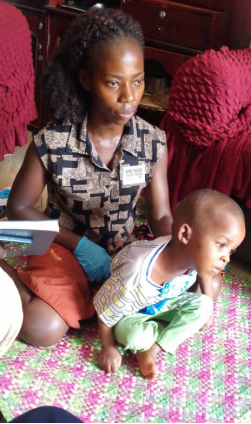
Kiggundu Emmanuel is a cheerful four-year-old boy from Nakapinyii Village in Nama Sub-county, Mukono District. Emmanuel was referred to the Sisters of the Sacred Heart of Jesus and Mary – Children In Need (SSHJM-CHIN) Inclusive Health Programme by a community nurse due to severe developmental delays associated with Cerebral Palsy.
At the time of enrolment, Emmanuel was unable to sit, crawl, stand, or walk independently. He had poor head and trunk control, generalized muscle weakness, excessive drooling, and depended entirely on his caregiver for positioning and daily activities. These challenges limited his ability to interact with his surroundings and participate in age-appropriate activities.
Emmanuel lives with his maternal grandmother, who serves as his primary caregiver and strongest advocate. Like many caregivers of children with disabilities, she faced significant challenges balancing household responsibilities while providing the intensive care Emmanuel required. She worried about his future and questioned whether he would ever gain independence or meaningfully engage with his environment.

Through support from the SSHJM-CHIN Inclusive Health Programme, funded under the CWD Year 2 Grant, Emmanuel was enrolled in both centre-based and home-based rehabilitation services. A multidisciplinary team comprising physiotherapists and occupational therapists developed and implemented a personalized intervention plan focused on: Strengthening neck and trunk muscles, Improving sitting balance and posture, Enhancing hand function and play skills, Reducing excessive drooling,Training and empowering his grandmother to continue therapeutic activities at home.
Progress was gradual but encouraging.
CHIN’s CBR Officer with Emmanuel during therapy ( Neck control and sitting training)
Through regular therapy sessions, adaptive seating support, home visits, and caregiver training, Emmanuel steadily gained better head and trunk control. He became more attentive during therapy sessions and showed increased interest in toys and activities around him.
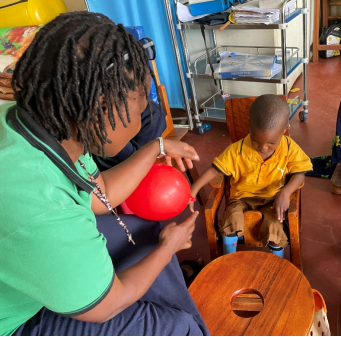
Today, Emmanuel can sit independently on the floor for short periods without support. He can use both hands to reach for, grasp, and manipulate toys, enabling him to actively explore and engage with his environment. His drooling has significantly reduced, improving his comfort, appearance, and social interactions. Most importantly, he is now able to participate more meaningfully in family life and interact with people around him.
These achievements represent significant developmental milestones that were previously thought to be beyond his reach.
Emmanuel’s journey demonstrates the transformative impact of early intervention and continuous rehabilitation services for children with disabilities. The combination of professional rehabilitation support, caregiver empowerment, adaptive interventions, and consistent follow-up has significantly improved his quality of life and functional independence.
For Emmanuel's grandmother, the changes have brought renewed hope and confidence in his future. Emmanuel is now more engaged, more independent, and better able to participate in everyday activities. His progress has reduced caregiver burden while creating opportunities for further development and inclusion within his family and community.
While Emmanuel's rehabilitation journey continues, the progress achieved over the past year highlights what is possible when children with disabilities have access to quality rehabilitation services and dedicated caregiver support.
This case study highlights the importance of a family-centred and multidisciplinary approach to disability inclusion. A key factor in Emmanuel's progress was the active involvement of his grandmother, who received ongoing coaching and support to continue therapy activities at home. This strengthened the sustainability of interventions beyond clinical sessions and ensured continuity of care.
The project also demonstrates the value of combining centre-based and home-based rehabilitation services, enabling children with significant mobility challenges to receive consistent support within their own environments.
One notable challenge was Emmanuel's severe developmental delay and complete dependence on his caregiver at enrolment. However, through regular therapy, caregiver commitment, adaptive equipment support, and continuous follow-up by the rehabilitation team, these barriers were gradually overcome, resulting in meaningful improvements in Emmanuel's functional abilities, participation, and overall wellbeing.
Emmanuel's story is a powerful reminder that with the right support, dedicated caregivers, and access to rehabilitation services, children with disabilities can overcome barriers and achieve meaningful change.